Chemistry & Selection
18650 vs LiFePO4 Battery Pack: A Practical Selection Guide for OEM Equipment
Understand why cell format and chemistry solve different parts of a battery selection decision.
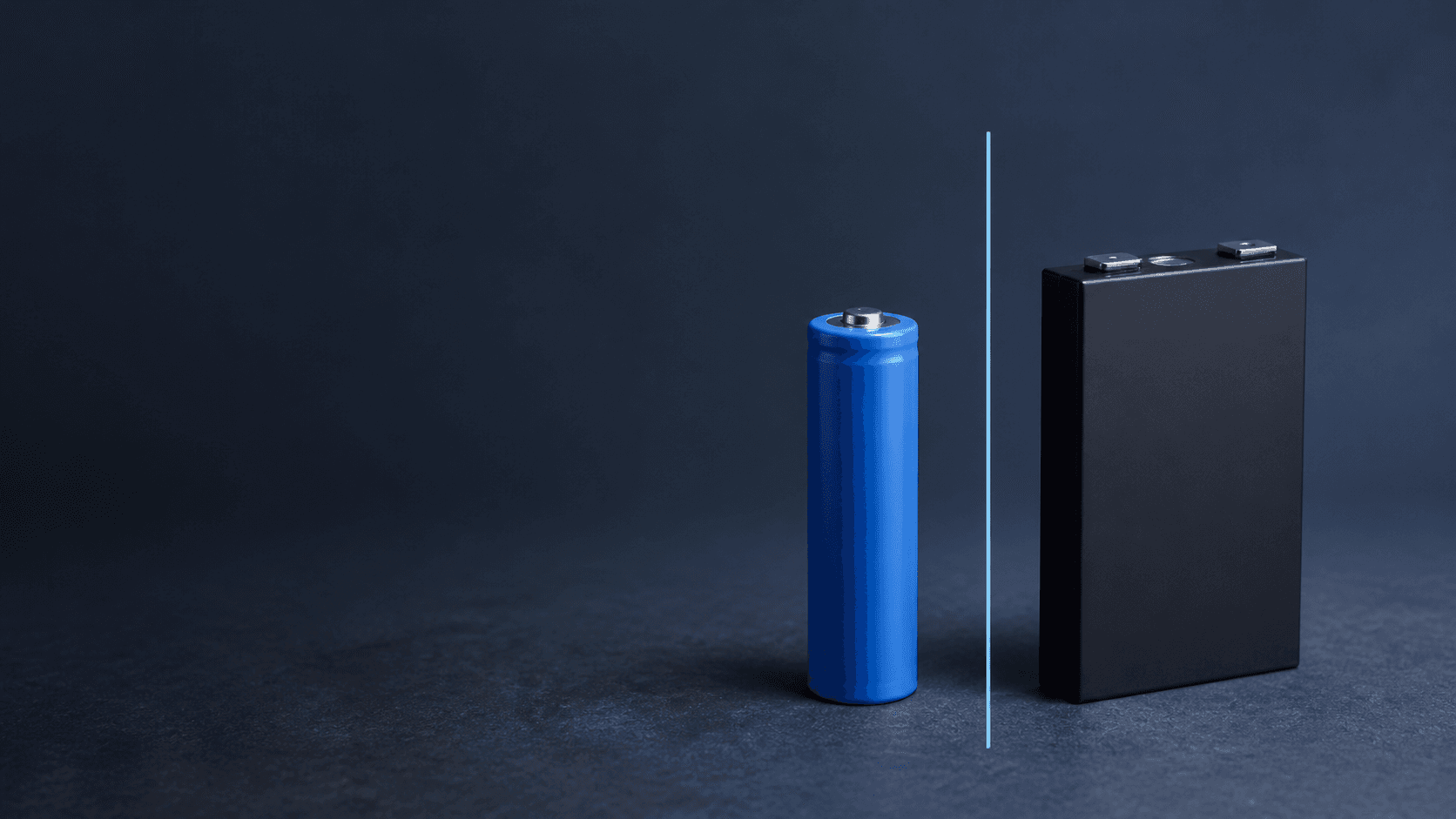 Illustrative visual. Final configuration and documentation scope are assessed per project.
Chemistry & Selection
Introduction
“Is LiFePO4 better than an 18650 battery pack?” is a common buyer question, but it combines two different categories. **18650** describes a cylindrical cell format: approximately 18 mm in diameter and 65 mm long. **LiFePO4** describes a cell chemistry: lithium iron phosphate. An 18650-format cell can use different lithium-ion chemistries, and LiFePO4 cells can be supplied in cylindrical, prismatic, or other formats. The comparison is therefore not a simple winner-versus-loser choice.
For an OEM buyer, the useful question is: which pack architecture and chemistry best match the product’s voltage window, energy need, current profile, installation space, charging system, operating environment, documentation route, and commercial plan? A custom 18650 battery pack may be a practical option where modular cylindrical layout and compact integration suit the equipment. A LiFePO4 battery pack may be worth evaluating for a project with a different voltage platform, operating pattern, and product-level priorities.
This guide gives a decision framework rather than a generic promise about performance. Final cell choice, protection settings, and documentation applicability should always be confirmed for the finished configuration.
Chemistry & Selection
1. First, separate cell format from chemistry
What an 18650 designation tells you
The 18650 designation tells a designer about the basic cylindrical form factor. It does not, by itself, state the cell chemistry, capacity, current capability, quality level, or whether a final pack is suitable for a particular product. In a custom battery pack, the arrangement of cells in series and parallel, interconnect design, BMS, enclosure, wiring, fuse, connector, thermal path, and charging method are as important as the individual cell format.
An 18650 custom battery pack can be attractive when the product has a shape that benefits from a modular cylindrical layout, when a replacement or development path is based on an existing cylindrical architecture, or when the expected current and energy targets are compatible with evaluated cells and protection design. None of those points removes the need to assess integration and application behavior.
What LiFePO4 tells you
LiFePO4 identifies lithium iron phosphate chemistry. Cell nominal voltage, charge behavior, discharge curve, physical format, and BMS configuration differ from other lithium-ion chemistries. For example, a BMS and charger cannot be selected merely because the pack has a similar “12 V” or “24 V” market label. They must match the cell count, chemistry, voltage limits, current profile, and protection strategy.
LiFePO4 may be considered for applications such as backup systems, industrial equipment, and other products where the overall system requirements justify evaluation. It should not be presented as universally preferable for every portable, robotics, consumer, or medical product. Product space, power demand, charging system, service model, and market requirements may lead to a different technical conclusion.
Chemistry & Selection
2. Use a requirement table before you compare products
This table is deliberately practical. It gives an engineering team the inputs needed to ask meaningful follow-up questions. It is also useful to procurement teams because it makes a supplier comparison less dependent on broad claims such as “high performance” or “long life.”
Chemistry & Selection
3. Compare voltage behavior at the system level
Nominal labels can mislead
An equipment designer should validate the voltage range seen by the load, not only match a nominal pack label. Cells have chemistry-dependent charge and discharge behavior. A pack’s voltage also changes with state of charge, current demand, temperature, and internal resistance. The charger and BMS need to be configured for the correct chemistry and series count, while the host equipment must tolerate the actual operating range.
For an existing system, send the charger label, controller data, low-voltage cutoff information, and any existing battery label to the manufacturer. For a new system, state the intended voltage window and which components are still open for selection. This is more useful than forcing a pack into a nominal category because a competitor’s product uses that label.
Questions for the electrical review
- What is the equipment’s maximum and minimum permitted DC input voltage?
- Does the load have large motor inrush or communication peaks?
- What charger is used, and is it chemistry-specific?
- Does the host need pack-level data, such as voltage, current, temperature, or fault state?
- What happens at low state of charge: reduced output, controlled shutdown, or unexpected reset?
These questions matter whether the project starts with an 18650 battery pack or a LiFePO4 battery pack. In factory testing, they become part of the agreed test conditions rather than an informal assumption.
Chemistry & Selection
4. Compare energy, current, and heat together
Energy density is only one requirement
It is tempting to choose the option that looks best on a capacity or energy-density chart. But an OEM product must also meet current demand, mechanical fit, thermal behavior, charge acceptance, service constraints, and commercial targets. A compact pack with high energy density may be unsuitable if it cannot meet repeated peak demand in the device’s actual duty cycle. A larger pack may be inconvenient if it prevents installation or makes the finished product too heavy.
The correct process is to convert the device use case into testable conditions. For example: “the robot operates for 90 minutes on a mixed floor route, sees defined acceleration peaks, returns to a dock, and must remain safe to handle during the specified charge cycle.” That statement is more actionable than asking for “the strongest battery.”
Current capability is a pack-level question
Current demand flows through more than the cells. It passes through nickel or busbar connections, fuses, wires, connectors, BMS components, switches, and the equipment interface. A current figure that looks plausible at cell level may not be appropriate for the final configuration without a complete design review.
Provide both continuous and peak current, plus the duration and frequency of peaks. If possible, share a captured current trace from a representative product. A supplier can use this to define a validation plan and identify whether test fixtures, connector changes, or BMS settings should be considered.
Chemistry & Selection
5. Let mechanical layout influence the chemistry conversation
18650 packs are built from a modular geometry
The cylindrical layout of an 18650 pack can offer flexibility in series-parallel arrangement, but it also creates a three-dimensional mechanical design problem. The pack must fit the enclosure, protect the cells, route cables safely, manage tolerances, and remain manufacturable. A 3D envelope alone may not reveal all constraints; mounting features, wire bend radius, connector access, and service clearance matter.
LiFePO4 packs can use different form factors
LiFePO4 chemistry can be implemented in different physical formats, so a buyer should not assume one external shape. State the maximum envelope, target weight, mounting method, and whether the pack is replaceable. If a standard-looking 12 V format is under consideration, verify terminal arrangement, enclosure dimensions, protection behavior, charge requirements, and installation orientation for the actual project.
Use drawings and photos early
Before prototype release, share the space model and equipment photos. During installation preparation, confirm connector keying, cable direction, fastening, access for service, and interaction with adjacent parts. This is often where a technically feasible pack becomes a finished-product risk—or an orderly design decision.
Chemistry & Selection
Mid-article CTA: Compare your actual product requirements
Do not select a chemistry from a catalogue thumbnail. Send Plusenerg your device voltage, runtime target, current profile, installation envelope, charger details, and market. We can structure the engineering questions needed to compare a custom 18650 battery pack and a LiFePO4 battery pack for your project.
Chemistry & Selection
6. BMS, charger, and communication need to match the pack
A BMS monitors and protects a multi-cell battery pack according to the selected chemistry and configuration. The exact behavior—voltage limits, current thresholds, temperature rules, balancing approach, wake-up logic, and communication—should be agreed against the application. It is not credible to copy protection settings from a different chemistry or cell count simply because the product uses a familiar nominal voltage.
For equipment with an existing charger, send its output specification and interface. For products with a charging dock, explain docking sequence, allowable charge time, and any host-controlled behavior. For connected equipment, identify required communications such as CAN, SMBus, UART, or RS485 and provide the available protocol information. These details are often the difference between a standalone battery concept and a manufacturable system.
Chemistry & Selection
7. Consider validation, documentation, and shipment before production
Validation must represent the final use case
Battery pack validation should be scoped to the finished design and expected operating conditions. A useful test discussion can include electrical load, charge behavior, temperature monitoring, mechanical fit, connector retention, and any agreed communication behavior. The right test set depends on the product; do not claim that one internal test proves suitability for all applications.
If you publish a test image, use a genuine photo of the actual test set-up, with project-sensitive information protected. An AI-generated lab visual can explain a concept, but it cannot prove a factory test was performed.
Documentation is configuration-specific
For international shipment, documentation and packaging requirements need to be assessed against the final battery configuration, destination, and transport method. IATA’s lithium battery guidance emphasizes that lithium batteries are subject to transport requirements and that relevant test-summary information must be made available by manufacturers and subsequent distributors. [IATA battery guidance](https://www.iata.org/en/programs/cargo/dgr/lithium-batteries)
This is particularly important when an OEM changes chemistry, cell format, series count, enclosure, or packing arrangement. Ask early what documents are needed for the intended route, and schedule shipment inspection around the approved configuration—not a generic sample photo.
Chemistry & Selection
8. A decision workflow for procurement and engineering
- **Define the equipment**: Use case, duty cycle, environment, and service model.
- **Capture electrical inputs**: Voltage range, runtime, continuous and peak current, charger and host interface.
- **Confirm fit**: Space envelope, mounting, cable exit, connector, weight, and access.
- **Compare feasible architectures**: Do not compare labels alone; compare complete pack solutions.
- **Plan validation**: Agree the conditions that need to be checked for the intended product.
- **Review documentation and shipping**: Confirm final-configuration applicability before dispatch.
Chemistry & Selection
FAQ
Is an 18650 battery pack the same thing as a Li-ion battery pack?
An 18650 pack is usually discussed as a pack built with a cylindrical cell format. “Li-ion” is a broader category. The exact cell chemistry and pack design must be confirmed, not inferred from the 18650 label alone.
Is LiFePO4 always safer or better for OEM equipment?
No chemistry should be selected by a broad claim alone. Evaluate the product voltage, load profile, charging system, dimensions, operating environment, documentation needs, and target market. The final design must be reviewed as a complete pack and system.
Can an existing charger be reused when changing battery chemistry?
Only after compatibility is checked. Charge voltage, charge profile, BMS behavior, connector, and system controls may differ. Send the charger data to the technical review.
What should I send for a chemistry comparison?
Share the application, voltage range, target runtime, continuous and peak demand, available space, charger information, target market, forecast quantity, and any existing battery or drawing.
Chemistry & Selection
Conclusion
The choice is not “18650 versus LiFePO4” in the abstract. 18650 is a form-factor starting point; LiFePO4 is a chemistry starting point. The right selection comes from the product’s actual electrical, mechanical, operational, and commercial conditions. A disciplined comparison helps avoid late charger conflicts, insufficient peak capability, poor mechanical fit, or documentation surprises.
Chemistry & Selection
Final CTA
**Need to compare an 18650 and LiFePO4 direction for a real device?** Send your application brief and reference materials to Plusenerg. We will help organize the requirements before you commit to a pack architecture.